Monday, April 18, 2016

A Wild Success: Food


Part 3 in a series of stories about the Capitol Lake Interpretive Center

Text by Nancy Partlow©  All photos were taken at the Interpretive Center by Nancy Partlow© or Barry Troutman©

The Capitol Lake Interpretive Center attracts so much wildlife because of its abundance of food.  This is not surprising, since the native plants installed there were chosen specifically for this purpose, to provide a wide variety of fruits, seeds and insects.

Oregon grapes

The CLIC's heavy concentration of berry-bearing shrubs and trees especially contribute to the park's reputation as a birding hotspot.

One species of plant that the familiar American robin  frequents is Red elderberry.  The crimson fruits are eaten so fast  they seem to evaporate.


Lonicera involucrata, or Twinberry is another a wildlife favorite.  I was unfamiliar with this shrub prior to seeing it at the Interpretive Center, and was surprised at the play it gets.


Twinberry  attracts pollinators with nectar-sweet flowers, and birds with fat, shiny berries.

Anna's Hummingbird sips nectar from a twinberry blossom at the CLIC
Photo courtesy of Barry Troutman

In the spring, high-pitched calls and rustling shrubbery alert human users of the CLIC to flocks of Cedar Waxwings feasting in the large, trailside bushes.


Omnivorous waxwings may be the greatest beneficiaries of our state capital's most thoughtfully-conceived wildlife area, freely exploiting its bounty of fruits, insects and flowers. 

A Cedar waxwing eats hawthorn berries at the CLIC
Photo courtesy of Barry Troutman

There is an old Madrone tree next to the CLIC's main trail.  It comes alive with swarms of feeding-frenzied birds when the berries are ripe.

A Red-shafted flicker harvests Madrone berries
near the Interpretive Center's main trail.
Photo courtesy of Barry Troutman

Vireos, warblers, robins, flycatchers and wood ducks devour Red-osier dogwood's copious fruits.
Red-osier dogwood berries

Plush, velvety thimbleberries are a juicy enticement to humans and wildlife alike.

Thimbleberry

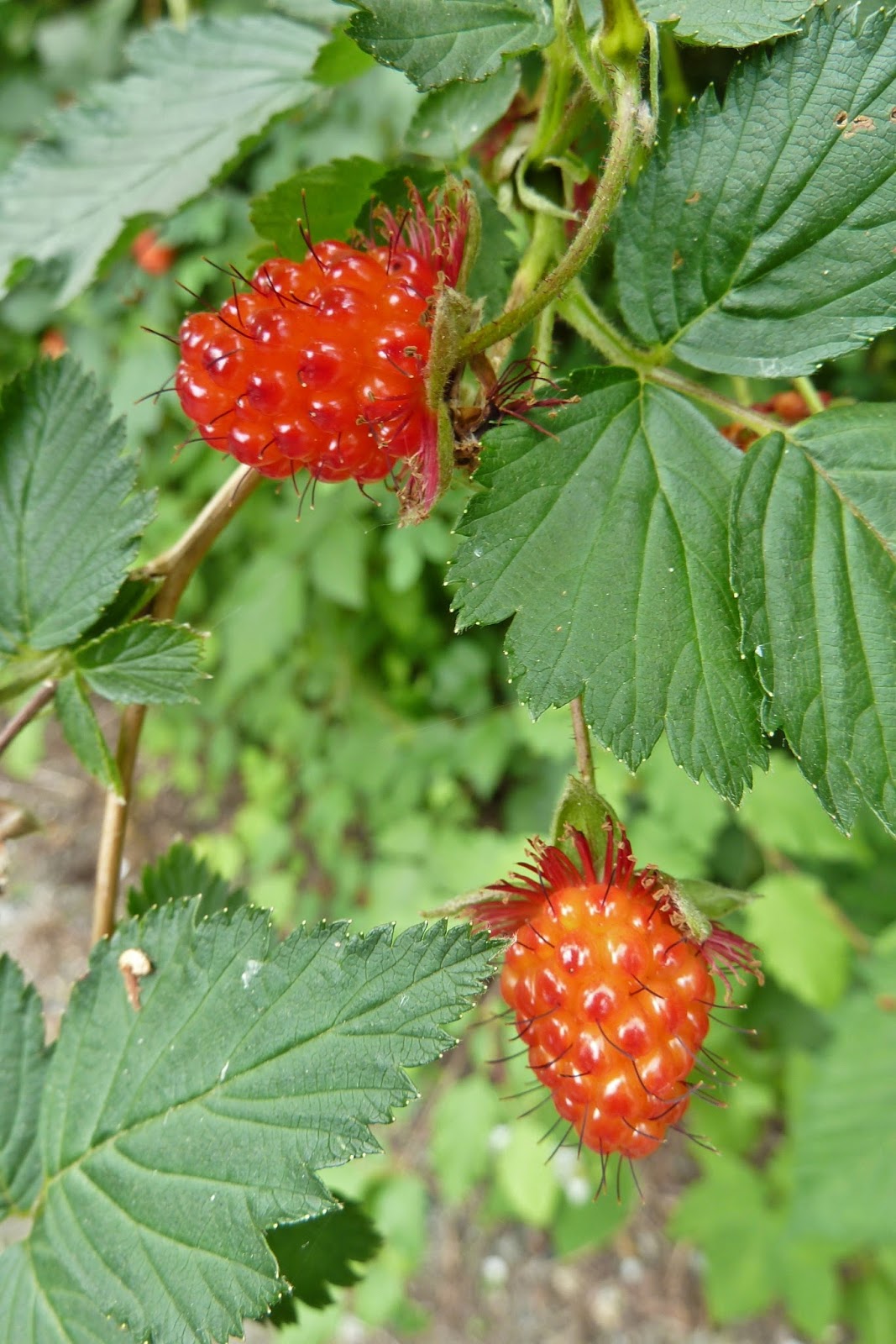
Salmonberries glow with the light of the sun that grew them.  They are consumed by a wide variety of CLIC bird species including robins, tanagers, finches, wrens, bushtits and towhees.

Salmonberries

Seeds are an additional source of nourishment at the CLIC, where Red alder is the most abundant tree by number.  Its diminutive seed cones provide chickadees and other small birds welcome winter fodder.

Photo courtesy of Barry Troutman

Douglas fir cones extend an open invitation to nuthatches, chickadees and small mammals.                                            


Nootka rose hips are eaten by juncos, grosbeaks, thrushes, chipmunks, rabbits and deer.


Some birds use the tough seeds as grit to help them digest food.


Capitol Lake is a fecund breeding pond for diverse species of flying insects that keep CLIC inhabitants fat and happy.  For example, it’s not uncommon to see clouds of “gnats” wafting above the trails. These are actually chironomus midge flies.  In their larval and pupal stages, midges live on the muddy bottom of the lake, where fish, birds and aquatic insects consume them. In their adult flight form, male chironomids create swarms of thousands of individuals swirling in now-you-see-‘em-now-you-don’t whirlwinds.
                                                                 

Male midges have elaborate, feathery antennae, which are used to detect the specific buzz tone that a female fly emits as she enters the swarm to mate.


Their large antennae don’t seem to save them from the sticky webs of spiders, or from the beaks of hungry hummingbirds that pluck the tiny flies from the air with ease.

Another freshwater aquatic insect with an adult flight form is the October Caddis Fly.  Caddis flies breed in the near-shore leaf litter at the bottom of the lake, emerging into winged insects in the fall, although I've often seen them at other times of the year.  Fly-catching birds perform impressive aerial acrobatics pursuing them.


Leaf litter is a valuable nutritional resource.   It mulches and nourishes the CLIC's many trees and shrubs, but also provides a rich larder for ground-feeding birds and mammals that kick up the organic debris in search of fallen seeds, grubs and other small invertebrates.


Of course, the main food at the CLIC is the esculent greenery that supports foliage-munching mammals and insects.

A young deer buck browses scrumptious new growth.

A caterpillar hides out in a thimbleberry blossom to escape
the eyes of hungry birds

The Capitol Lake Interpretive Center is animated by creatures pursuing life's prime directive of survival.  This is not by accident, but by design.  In an era when humans are destroying wildlife habitat at an astounding rate, the CLIC extends a small but gracious overture to our earthly companions to share their lives with us.  For that reason alone, it is well worth celebrating.   

Many thanks to Barry Troutman for the use of his wonderful photos.
--------
Resources:

Links:

Washington Native Plant Society's list of plants that provide berries and seeds, and the animals that eat them:

http://www.wnps.org/landscaping/herbarium/seedberrylist.html

Videos:

An American Robin gobbling down red elderberries at the CLIC:

https://www.youtube.com/watch?v=DYhi09PCiRw

A Song sparrow scratches up leaf litter at the CLIC in search of food:

https://www.youtube.com/watch?v=zzDciZQfPJg

Online photos:

Robin eating red-osier dogwood berries:

http://www.butterflyonmyshoulder.ca/Journal/08_09/08_15_09/RobinJ0843.jpg

Red-breasted sapsucker with salmonberry in its beak:

http://birdnote.org/sites/default/files/red-breasted_sapsucker_with_salmonberry_blog_0.jpg

Song sparrow with thimbleberry:

https://lh3.googleusercontent.com/3phpNweacgauZcY9tQxED9ByrO_Tq1m8rrMSkgs8uHRP=w1446-h964-no

Juvenile robin eating Oregon grapes:

https://blogger.googleusercontent.com/img/b/R29vZ2xl/AVvXsEjO0uBgFwM36DNx_MG92VvQ5BKT4CL0G9OWlsRc-8ztnRXb_a9U-Lp3_uSxXm5I6SmSECIxvgs6mKszQHQnBzFFCvSEcOZ2llTxQN-uqPl_XX0UloQnsUqc9PrPWTn_G2K7pjYa1zkq-64/s1600/Robin,+American+2010.07.09a+sub-adult+eating+Oregon+Grape.jpg


A salmonberry with a bird bite in it


Friday, March 18, 2016

Olympic Mountain Vistas from the Capitol Lake Interpretive Trail

Text and photos by Nancy Partlow©

I was so surprised when I first realized that the Olympic Mountains can be seen from the Capitol Lake Interpretive Center. 

When looking up the estuary, my sense of direction gets all turned around, so it just didn’t make sense to me.  Since then, I’ve learned to orient myself and now enjoy the beautiful views that avail themselves to all CLIC users whenever the clouds lift above Washington’s rainforest peaks.
I’d like to share some pictures that I’ve taken from the CLIC dike trail that forms the southern shore of Capitol Lake’s middle basin. 
Sun and shadow over the Olympics:


Canada Geese fly low over the lake with the Olympics as a dramatic backdrop:


The Brothers peak peeks above the nearshore forest surrounding the lake:


Fog below and clouds behind create the optical illusion of a mountain range floating in air:


The city of Olympia is in the process of assessing its downtown “viewsheds” to be protected.  Janine Gates recently wrote about this effort for her Little Hollywood blog:
Although Capitol Lake is not in Olympia or even Tumwater, (it is part of the Capitol Campus and therefore under state jurisdiction), I still think the gorgeous Olympic Mountains views from the CLIC should be preserved.   
    

Saturday, February 27, 2016

A Wild Success - The Capitol Lake Interpretive Center, Part 2 - Plants

Text and photos by Nancy Partlow©
All photos taken at the Capitol Lake Interpretive Center unless otherwise noted
The Capitol Lake Interpretive Center is a verdant refuge for wildlife.  Its extensive palette of native trees and shrubs provide a bounty of food and shelter for many creatures. 

Native plants create healthy ecosystems.  Indigenous insects have evolved to eat plant leaves of a certain chemical composition – namely, those provided by endemic flora.  In other words, local insects have evolved to eat local plants.
By definition, native insects have shared little or no evolutionary history with alien plants…, and they thus are not likely to possess the adaptations required for using these plants as nutritional hosts. Consequently, the solar energy harnessed by alien plants is believed to be largely unavailable to native insect(s)…- at least until they evolve the behaviors and physiology necessary to eat them – and therefore unavailable to all animals that include these insects in their diets.

From Bringing Nature Home by Douglas W. Tallamy
In addition to their chemically-compatible leaves, native plants offer up a wide buffet of flowers, fruits and seeds throughout the year.  Their branches host bark-dwelling insects, and their leafy ground detritus hides countless worms, grubs and other critters that birds and small mammals love to scavenge and eat. 
For human users of the CLIC, native plants bestow a subtle beauty to the eye, and the opportunity to observe animals “at home” in their natural setting. 
Here are photos of some native plant species growing at the CLIC:
Holodiscus discolor - Ocean Spray
  
Lonicera involucrata - Twinberry
Spiraea douglasii - Spirea

Sambucus racemosa - Red elderberry
 
Rosa nutkana - Nootka rose
 
Philadelphus lewisii - Mock Orange
  
Mahonia aquifolium - Tall Oregon grape
 
Physocarpus capitatus - Pacific ninebark

Salix sitchensis - Sitka willow

Cornus sericea - Red-osier dogwood
  
Rubus parviflorus - Thimbleberry
  
Rubus spectabilis - Salmonberry

--------
Resources:

Native plant species installed at the CLIC in 2004:


Red Elderberry

Salmonberry

Serviceberry

Snowberry
Thimbleberry
Twinberry
Oregon Grape
Nootka Rose
Redosier Dogwood
Red Flowering Currant
Ninebark
Mock Orange
Vine Maple
Western Red Cedar
Ocean Spray
Beaked Hazelnut
Indian Plum
Western Crabapple
Western Hemlock
Sitka Willow
Black Hawthorn
Black Cottonwood
Sitka Spruce
Bigleaf Maple
Cascara
  
Additional natives that were already there: 
Spirea
Paper Birch
Alder   

Monday, January 25, 2016

A Wild Success - The Capitol Lake Interpretive Center- Part 1

Text by Nancy Partlow ©
All photos were taken at the Capitol Lake Interpretive Center by Nancy Partlow©, unless otherwise noted.


My family’s interest in the Capitol Lake Interpretive Center began circa 2010. We were looking for someplace easily walkable, wheelchair accessible, and in a natural setting.  The Interpretive Center on Deschutes Parkway fit the bill perfectly, and it’s been a love affair ever since.
The Center’s history is interesting.  According to Washington State Department of Enterprise Services web site:
"Development of the Capitol Lake Interpretive Center was made possible with the 1979 dredging of Capitol Lake. In that project, an 18-acre, two-cell dewatering basin was created to process the spoils of future dredge operations. A much smaller dredging operation in 1986 utilized the basins for this purpose. A third dredging operation planned in the mid-1990’s was prevented, however, because portions of the dewatering basins had naturally evolved, were determined to be wetlands, and could not be disturbed.
The construction of Heritage Park in 1997 included the designation of these 18 acres as an Interpretive Center with a commitment by the state to establish and maintain a high quality wetlands in the former dewatering basins. These new wetlands mitigate the loss of open-water habitat and the expansion of the park grounds into formerly submerged lake areas.
The 2001 Nisqually Earthquake caused considerable damage to the area. However, reconstruction provided an opportunity for considerable improvements.
Today, the Interpretive Center holds great promise to provide visitors with an experience that contributes to their understanding of our natural systems. It is one of the most unique components of any state capitol in the nation."
In September  I walked the CLIC with Bob Barnes, the landscape architect who along with state horticulturist Susan Buis and Erica Guttman from the Native Plant Salvage Project, was responsible for the 2003 replanting of the trail.  He shared with me some photos from that time.

Volunteers help plant native plants at the Capitol Lake
Interpretive Center.

An enthusiastic proponent of native plant restoration, he conveyed his philosophy by quoting Chief Seattle: 
"We did not weave the web of life, we are merely a strand in it"
The Interpretive Center is a wonderful example of the flourishing web of relationships created by installing a diverse mosaic of native plants.  The result is a magical place, vibrantly alive with wildlife; a natural area that on a small scale rivals the Nisqually Refuge. 
A song sparrow throws back its head and sings at the CLIC

A Spring azure butterfly sips nectar from ocean spray flowers 

A cedar waxwing in an alder tree

 
A Bombus mixtus bumble bee nectars from mock orange blossoms

The Capitol Lake Interpretive Center beautifully illustrates the concept of, “Build it, and they will come”.  It is a wild success.
The CLIC at the time of its 2003 remodel. 
Courtesy of Bob Barnes

Aerial photo of the CLIC today
From the Thurston County Geodata website

Thursday, January 7, 2016

Eagles and Salmon at McLane Creek

Text and photos by Nancy Partlow©
 

The annual gatherings of bald eagles on the Skagit River in the North Cascades are quite famous, but I never dreamed we had anything similar to that here in south Puget Sound. I was excited to learn that every late fall and early winter, bald eagles converge in numbers near the mouth of McLane Creek to feast on the bodies of dead and dying spawned-out salmon.


After heavy rains, bald eagles splay their wings to dry their feathers
at a foggy McLane Creek

According to the Draft McLane Creek Basin Water Resource Protection Study, McLane Creek Basin is comprised of several streams: 

McLane Creek Basin…is located in northwestern Thurston County, a little more than five miles west of the city of Olympia. It encompasses more than 7,000 acres that drain into McLane Creek and into Eld Inlet, and is bounded on its northeastern side by State Route 101, and on its northwestern side by the steep terrain of the Black Hills. The basin contains six major tributaries to McLane Creek, including Beatty Creek, Cedar Flats Creek, Perkins Creek, and Swift Creek. The area is one of the most ecologically intact basins within Thurston County that discharges to Puget Sound.
Fish species of the basin include cutthroat trout, winter steelhead, coho and fall Chinook salmon. But it is the large numbers of returning chum salmon that attract bald eagles from miles around.  An article from a Thurston County Stream Team newsletter describes the chum runs in the basin thus: 

At the beginning of the winter rains, adult chum salmon return to the icy waters to reproduce and then die. The chum salmon spawn anywhere from the lower mouth of McLane Creek up past the protected area of the McLane Creek Nature Trail. They also spawn in tributaries to McLane Creek: Swift, Cedar Flats and Perkins Creeks. WDFW staff do fish surveys during the spawning season to count the number of salmon along different reaches of the creeks. For the past ten years, an estimated 6 to 10,000 chum have returned to McLane Creek. Swift Creek had an estimated 12 to 25,000 and Perkins Creek, 700 to 3,000.

That’s a lot of fish!

I have visited this area during the fall salmon run for the last four seasons.  Two years ago, I watched more than 30 chum spawning right before my eyes in Swift Creek. 

Chum salmon spawning in Swift Creek

Yet it is dead fish that the carrion-loving eagles really go for, and there are plenty of those, too.


Dead salmon at McLane Creek

Upon entering the area, the pungent smell of decomposing salmon permeates the nostrils. The shrill, piercing cries of eagles and gulls penetrate the air.  Depending on what the tide is doing, the trees next to the McLane estuary may be festooned with many bald eagles. 
Fifteen bald eagles perch in a tree above McLane Creek
The fact that such normally-territorial birds tolerate each other’s presence is testament to the rich and abundant food resource. 

I asked Janet why there appear to be so many more juveniles than adult bald eagles at McLane Creek.  She pointed out that it takes four to five years for a bald eagle to attain adult plumage, so maybe four out of every five eagles would naturally be youngsters anyway. She also suggested that it might be easier for juvies to scavenge dead salmon than to catch live prey, which is a learned skill. It also could be that most adult eagles are currently defending their territories, since breeding season has already started for them. 

These last two theories made some sense to me.  I recently caught sight of an adult bald eagle at Capitol Lake.  It was eating a bird that it had caught (probably some kind of duck or gull). I wondered why it wasn’t out at the salmon streams getting fat on chum.  Perhaps this was one of a mated pair that annually nests above the Deschutes estuary, hunting in its home territory. 
Whatever the reason, I know that mature bald eagles nest near the McLane Creek estuary too, and every year I see at least one pair together.   

It’s thrilling to watch them mirror each other’s flight and occasionally, even briefly lock talons.
Views of eagles along this stretch of McLane Creek are mostly from far across large farm fields, which is actually a good thing, so that the birds aren’t disturbed.  The tall firs, cottonwoods and alders next to Delphi Road may afford closer views.
When I was a child growing up in Olympia, seeing a bald eagle was an exceedingly rare occurrence.  That is why I still experience a major thrill whenever I catch sight of one.  I am so glad that bald eagle numbers have rebounded to a point where we can again experience one of nature’s great spectacles right here in Thurston County.


Other resources:

Draft: McLane Creek Basin Resources Protection Study

Stream Team article on chum salmon at McLane Creek

Videos:

Bald eagles in tree at McLane Creek
Bald eagle courtship behavior at McLane Creek
Gulls and eagles soar over McLane Creek
Bald eagle eating a bird at Capitol Lake

Wednesday, December 30, 2015

Native Pollinator Study Group (and Blog) Update

Every fourth Monday evening in Olympia a number of us gather to explore the rich diversity of bees. Right now, with winter rain and wind and lack of flowers, there is not much chance to observe pollinators except in a book.  Despite this, our January topic is shaped by two bumble bee optimists whom we hope to glimpse.  To prepare for February’s topic, (and in case you got a book-store gift card recently), we recommend three recent books that showcase the diversity of bees in North America, and invite you to grab (at least) one of them. For more information, including the bee books we recommend, check our Study Group page, or our page of just the fliers.

Glen
P. S. Google Blogger, our blog host, sent out the following. We aren't quite sure what it means, but here it is: 

"[S]tarting the week of January 11, we [Google / Blogger] will remove the ability for people with Twitter, Yahoo, Orkut or other OpenId providers to sign in to Google Friend Connect and follow blogs. At the same time, we’ll remove non-Google Account profiles so you may see a decrease in your blog follower count.

We encourage you to tell affected readers (perhaps via a blog post), that if they use a non-Google Account to follow your blog, they need to sign up for a Google Account, and re-follow your blog. With a Google Account, they’ll get blogs added to their Reading List, making it easier for them to see the latest posts and activity of the blogs they follow."

We hope this doesn't mean that we won't be able to notify you when we update our blog, but at this point there isn't much we can do beyond letting you know ahead of time in ways like this.  GB

Sunday, October 11, 2015

Owls in the Night

Barred Owl
     Somewhere in the deep dark of early morning, the Barred Owl called.  A piercing series of low hoots, repeated over and over again.  I came out of deep sleep and groggily pieced together the pattern:  Who COOKS for YOU?  Who COOKS for you?  With that voice pattern I knew it was a Barred Owl.

     I noticed Glen was stirring and quietly asked him:  “Do you hear the owl?”  He came fully awake with a snort and said: 
“What? What owl?” And then he heard it as well.

     We lay in the dark and listened to it call for several minutes.  Glen wondered if it might be calling to a mate, but we heard no answering calls.  I wondered if it might have been a young owl, born this year and moving through the neighborhood, looking for a territory to claim.  We tried to figure out where it was, and guessed that it was probably north and west of us, near Schneider creek.  

     We’ve lived in this neighborhood for over twenty years now, first on Garfield ravine and now
near Schneider creek and its ravine.  Even in the middle of a small city, these ravines are still great owl habitats, so this is not the first time we’ve heard Barred Owls.  But they rarely stay;  even though city rats provide a fabulous source of food, city crows tend to band together and drive out owls.  So it is a real treat when one comes through and graces us with its presence.

    So we lay in the dark and let the sound of the Barred Owl lull us back to sleep.  Somewhere in the night, it keeps watch and it hoots.  I feel safe and comforted by its presence.


Janet

Resources:
photo courtesy of Missouri Department of Conservation